Pneumatic Wire Butt Welders by Sterco — Consistent Pressure, Every Cycle, Every Shift
A wire drawing line running three shifts cannot depend on how firmly an operator happened to press a lever at 3 a.m. Clamping force and forging pressure have to be identical on the thousandth joint as they were on the first. That consistency is exactly what pneumatic operation delivers — and exactly why Sterco built its wire butt welder range around it.
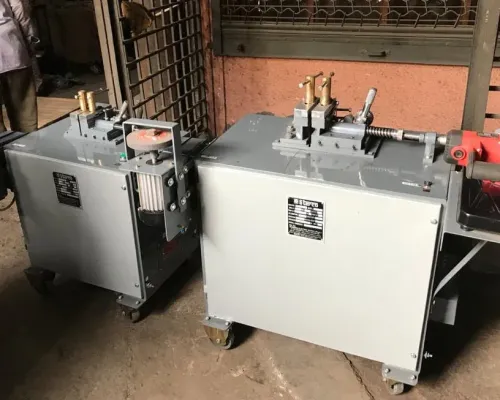
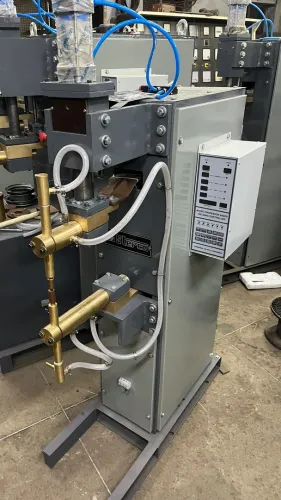
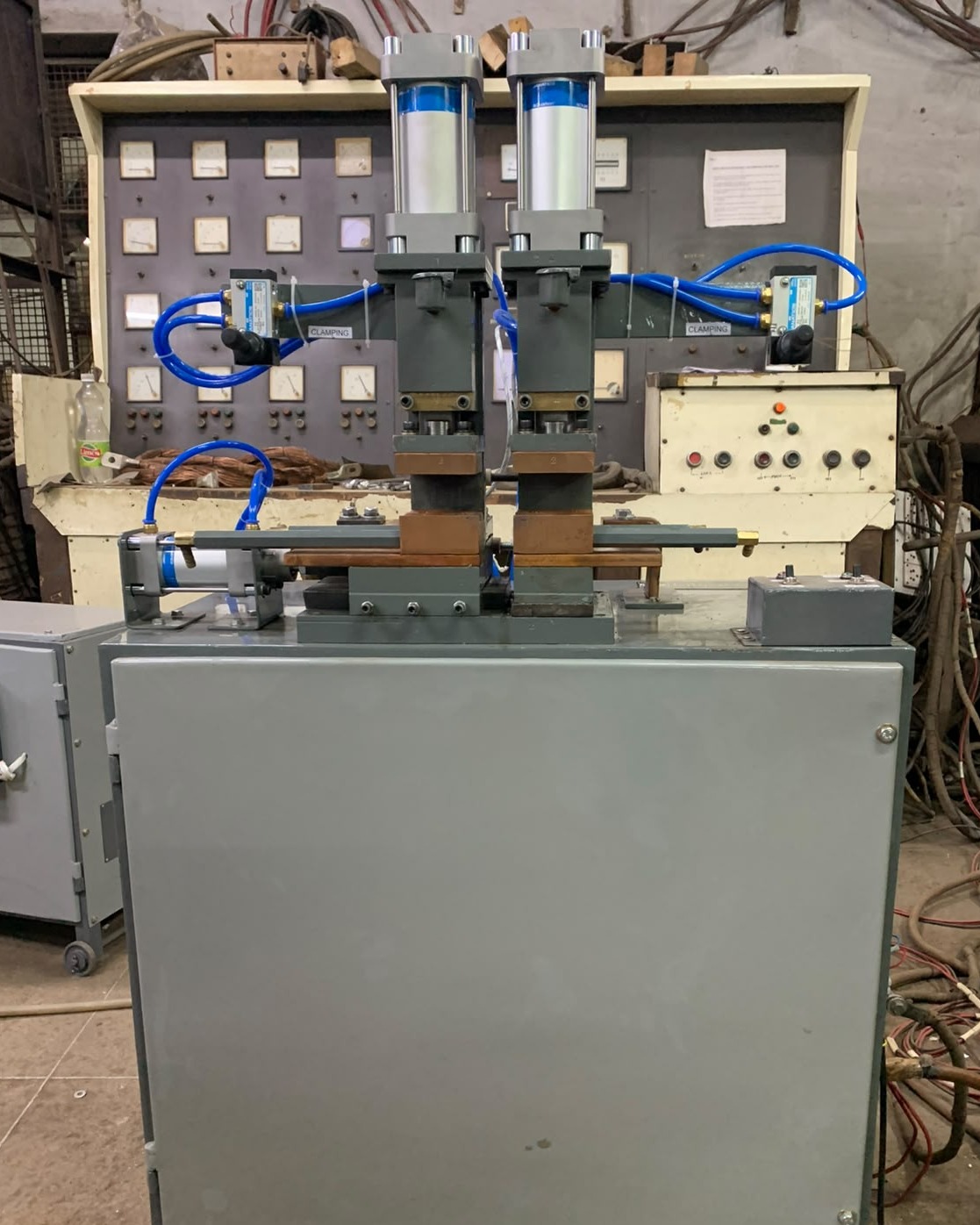
A Sterco pneumatic wire butt welder replaces manual clamping and forging with air-cylinder actuation, controlled to a set pressure and repeated cycle after cycle without operator fatigue entering the equation.
What Makes a Wire Butt Welder 'Pneumatic'?
In a manual butt welder, the operator applies clamping and forging force by hand lever, which means force varies — sometimes joint to joint, sometimes shift to shift depending on who is running the machine. In a pneumatic wire butt welder, compressed air drives the clamping cylinders and the forging stroke, at a pressure set once on a regulator and held there.
The result is a joint whose strength and finish depend on your machine settings, not on operator technique. That matters enormously on lines running continuously, where even a small proportion of weak joints means line stoppages downstream.
How Sterco's Pneumatic Wire Butt Welder Works
Load — Wire ends are positioned in the jaw sets, either manually or via line-feed alignment on integrated systems.
Pneumatic clamp — Air cylinders close the jaws at a pre-set, regulated pressure, gripping both wire ends securely and squarely on the same axis.
Weld — Current passes through the contact point, generating resistive heat at the interface within a controlled weld-time window.
Pneumatic forge — A second air cylinder drives the forging stroke, pushing the heated ends together at set pressure to complete the metallurgical bond and expel oxidised material.
Auto-release — Jaws open pneumatically once the cycle completes, and the joint moves on to dressing and downstream processing.
Because both clamping and forging are cylinder-driven, cycle timing is repeatable to a fraction of a second, and Sterco's controller lets you store separate weld schedules for each wire gauge your line runs.
Key Features of Sterco Pneumatic Wire Butt Welders
Dual-cylinder pneumatic system — independent cylinders for clamping and forging, so each function is pressure-tuned separately
FRL unit (Filter-Regulator-Lubricator) on the air supply line for clean, consistent, moisture-free actuation
Adjustable pressure regulators with gauge readout for both clamp and forge stages
Microprocessor-based weld controller with stored schedules by wire gauge — squeeze time, weld time, forge time and current all recalled at the press of a button
Fast cycle times, minimising line stoppage on continuous drawing, galvanizing and coating operations
Water-cooled electrodes and transformer on higher-KVA models for sustained multi-shift duty
Auto-cycle and semi-automatic modes, with foot-pedal override where manual initiation is preferred
Quick-change jaw and electrode sets for fast gauge changeover without full retooling
Safety interlocks preventing weld initiation unless jaws are fully clamped
Where It's Used
High-speed wire drawing lines — where downtime for a weak or inconsistent joint directly costs production hours
Galvanizing and coating plants — continuous wire feed through cleaning, pickling, coating and cooling zones
Wire mesh and weld mesh manufacturing — uninterrupted feedstock for automatic mesh weaving lines
Nail, fastener and staple manufacturing — continuous wire supply into heading machines
Spring coiling operations — joining stock wire between coils without manual delay
Cable armouring and wire rope stranding — maintaining line speed across strand changeovers
Pneumatic vs. Manual — Which Do You Need?
Choose pneumatic if your line runs multiple shifts, high speed, or if joint consistency across operators and shifts is critical to downstream quality. Choose manual only for low-volume, intermittent operations where the cost of an air supply and cylinders isn't justified by usage.
Why Choose Sterco
Pressure settings matched to your wire, not generic defaults. Share your wire gauge, material and line speed, and Sterco configures clamp and forge pressure specifically for your process before the machine ships.
Trial-welded before dispatch. Machines are set up and test-welded on samples matching your specification, so what leaves the factory is already proven on your material.
Inline integration available. Sterco builds pneumatic butt welders for standalone use or fully integrated into existing drawing, galvanizing or mesh-weaving lines, with automatic triggering from line sensors where required.
In-house design and manufacture, with electrodes, jaws, pneumatic circuits and control panels built under one roof, plus nationwide installation, training and after-sales support.
Frequently Asked Questions
What is the advantage of a pneumatic wire butt welder over a manual one?
Consistency and speed. Pneumatic clamping and forging apply the same pressure on every cycle regardless of who is operating the machine, which produces more uniform joint strength across a full production run. It also cycles faster than manual operation, reducing line stoppage time on continuous processes.
What air supply does a pneumatic wire butt welder require?
Requirements vary by machine size, but most Sterco pneumatic models operate on standard factory compressed air supply in the range of 5 to 7 bar. An FRL unit is fitted to condition the air before it reaches the cylinders — exact consumption and pressure specifications are provided for each model.
Can pneumatic pressure be adjusted for different wire gauges?
Yes. Clamp and forge pressure are independently regulated, and settings can be adjusted and stored per wire gauge, so switching between sizes on the same line does not mean re-tuning from scratch.
Is a pneumatic wire butt welder suitable for automatic, unmanned operation?
Yes, this is one of its main advantages. With line-sensor triggering, the welder can detect an approaching coil end and initiate the weld cycle automatically, making it well suited to fully automated wire drawing and galvanizing lines.
How does joint quality compare to a manual butt welder?
Joint quality can be equally good on both when correctly set up, but pneumatic operation removes the variability that comes from manual force application. On high-volume lines this translates to a lower rate of weak or failed joints over time.
What wire gauges can a pneumatic wire butt welder handle?
Range depends on the specific model and KVA rating, from fine wire through heavier wire rod. Jaw sets and pressure settings are matched to the gauge range you specify at the time of order.
Does it need water cooling?
Higher-capacity models typically use water-cooled electrodes and transformers to sustain continuous multi-shift duty without thermal drift. Lower-capacity units may run air-cooled — Sterco specifies this per model.
Can an existing manual wire butt welder line be upgraded to pneumatic?
In many cases the welding head itself needs to be a pneumatic model rather than a retrofit of a manual unit, since clamping and forging mechanisms differ structurally. Sterco can assess your existing setup and recommend the most practical upgrade path.
What is the price of a pneumatic wire butt welder in India?
Price depends on wire gauge range, KVA rating, cooling type, and whether the unit is standalone or built for inline automatic integration. Share your wire specification and line requirements with Sterco for an accurate quotation.
What maintenance is specific to the pneumatic system?
Beyond standard electrode and jaw maintenance, the pneumatic circuit needs periodic checks — draining the FRL bowl, verifying regulator settings hold steady, inspecting cylinder seals for air leaks, and confirming clamp and forge pressures against the gauge readings during routine servicing.
Get a Quote
Share your wire gauge, material, line speed and whether the unit needs to integrate with existing automation. Sterco will configure a pneumatic wire butt welder built for your line.
Sterco — Resistance Welding Machines Engineered in India.
Keywords