DC Electroplating Rectifiers by Sterco — Stable Current for Consistent Plating Quality
Plating thickness, brightness and adhesion all trace back to one thing at the tank: how clean and stable the DC current actually is. A rectifier that ripples, drifts or overshoots doesn't just waste power — it shows up as patchy deposits, burnt edges, inconsistent thickness across a batch, and rejected parts.
Sterco manufactures DC electroplating rectifiers for plating, anodizing, electropolishing and electroforming operations across India, sized from small job-shop tanks to high-current continuous plating lines.
What Is a DC Electroplating Rectifier?
A DC electroplating rectifier converts incoming AC mains supply into a controlled, stable DC output that drives current through the plating bath — from anode to cathode, depositing metal ions onto the component being plated. The quality of that DC output — how flat it is, how tightly it holds a set current or voltage, and how quickly it responds to bath changes — directly determines plating quality.
Sterco rectifiers are built around solid-state power conversion (SCR/thyristor or IGBT/switch-mode, depending on model) with closed-loop control that holds output current or voltage steady regardless of bath resistance changes as plating progresses.
Sterco Rectifier Types
SCR (thyristor-controlled) rectifiers
Robust, well-proven technology for general plating applications. Phase-controlled output with good stability, suited to a wide range of plating chemistries and current ranges.
IGBT / high-frequency switch-mode rectifiers
Compact, highly efficient, with very low output ripple and fast response to load changes. Preferred where plating quality demands are high — bright nickel, decorative chrome, precision electroforming — and where floor space or energy efficiency matters.
Pulse plating rectifiers
Deliver current in controlled pulse patterns rather than continuous DC, used for specialised applications requiring finer grain deposits, better throwing power into recesses, or specific alloy plating processes.
How Sterco Rectifiers Work
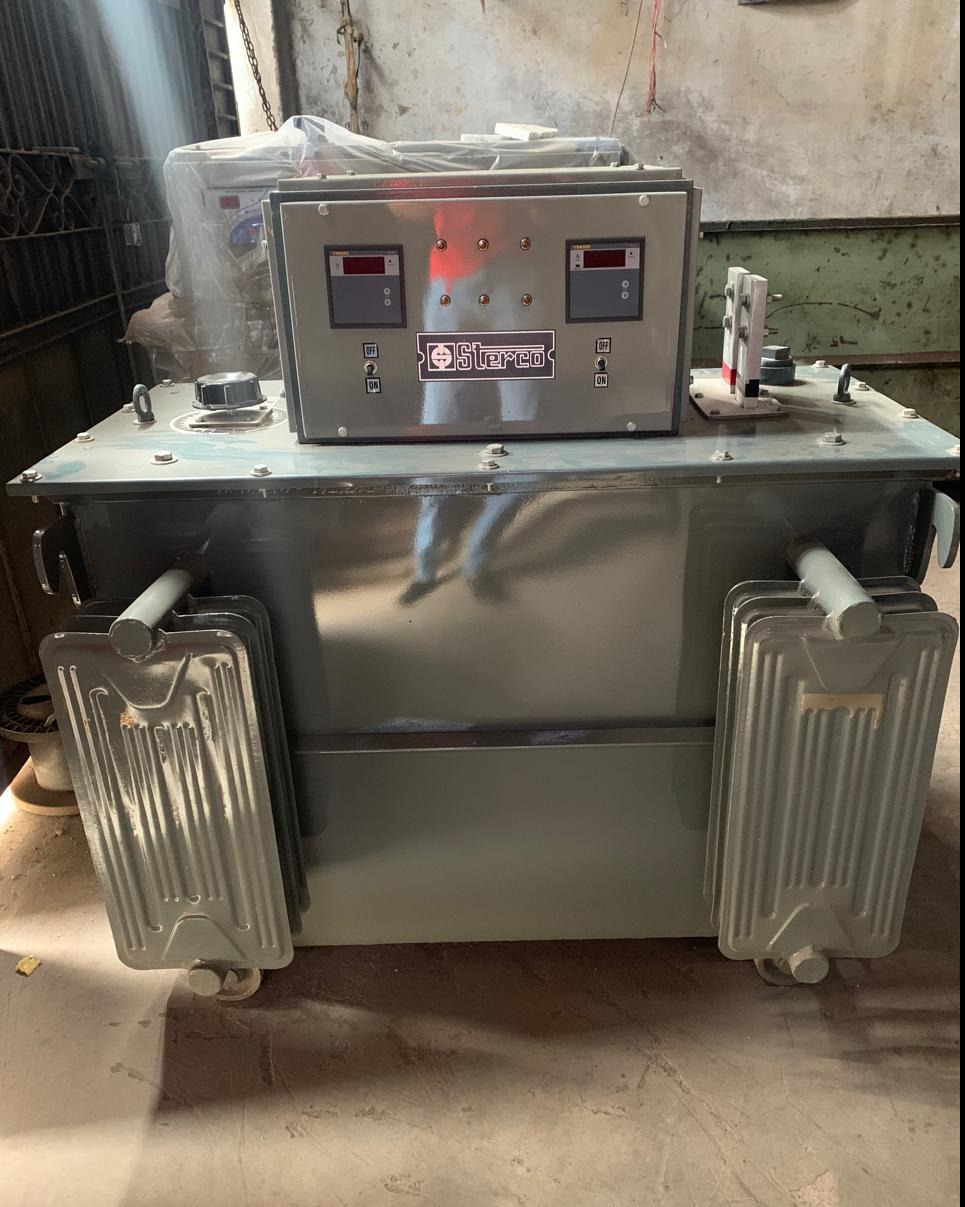
Input conditioning — Incoming three-phase AC is stepped down through a purpose-wound transformer matched to the rectifier's output rating.
Rectification — SCR or IGBT power devices convert the AC to DC, either through phase-controlled firing or high-frequency switching.
Filtering — Output filtering smooths the DC waveform, minimising ripple that would otherwise translate into uneven current density at the workpiece.
Closed-loop control — A feedback circuit continuously monitors output current and/or voltage, adjusting the firing angle or switching duty cycle to hold the set point steady as bath conditions change through the plating cycle.
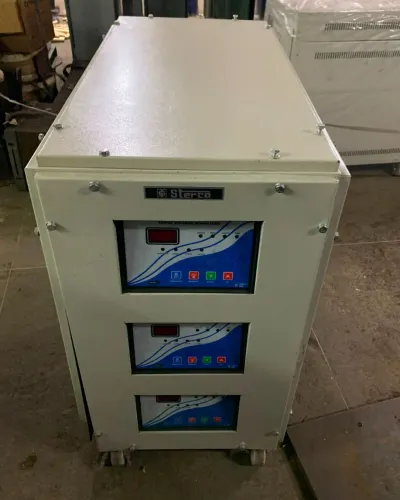
Metering and protection — Digital ammeter and voltmeter display real-time output, with protection against overload, short circuit and reverse polarity.
Key Features
Output ranges from a few hundred amps up to several thousand amps, at voltages typically from 6V to 24V DC, depending on process
Constant current and constant voltage modes, selectable to suit the plating process
Low ripple output — critical for bright, uniform deposits, particularly on IGBT models
Digital metering with current and voltage readout, and options for ampere-hour totalisation for batch tracking
Auto voltage/current regulation compensating for mains fluctuation and bath resistance drift during the cycle
Air or water cooled heat sink options depending on capacity and duty cycle
Remote sensing and control options for integration with automated plating lines
Robust enclosure rated for the humid, chemically active environment typical of plating shops
Applications
Decorative and functional plating — nickel, chrome, copper, zinc, tin, silver and gold plating
Anodizing — aluminium anodizing for architectural, automotive and consumer product finishes
Electropolishing — stainless steel and specialty alloy surface finishing
Electroforming — precision metal part fabrication through deposition
Electrogalvanizing — continuous zinc coating on wire, strip and sheet
Printed circuit board plating — copper and other metal deposition in PCB manufacturing
Why Choose Sterco
Sized to your tank and process, not a standard SKU. Share your plating area, current density requirement and process chemistry, and Sterco recommends output rating and control type to match.
Ripple performance that matches your finish requirement. Decorative bright plating and precision electroforming need tighter ripple control than general functional plating — Sterco specifies the right rectifier type accordingly rather than defaulting to one technology for everything.
Built for plating shop conditions. Enclosures, cooling and component selection account for the corrosive, humid atmosphere typical of plating floors.
In-house manufacturing and service, with installation support, calibration and after-sales service available nationwide.
Frequently Asked Questions
What is the difference between an SCR rectifier and an IGBT rectifier for plating?
SCR (thyristor) rectifiers are a well-established, robust technology suited to general plating with good stability and cost-effectiveness. IGBT or switch-mode rectifiers operate at higher frequency, giving much lower output ripple, faster response to load changes, higher efficiency and a smaller footprint — generally preferred for high-quality decorative plating and precision applications, at a higher initial cost.
How do I determine the current rating I need?
Current requirement is calculated from your total plating surface area and the current density recommended for your specific plating process and chemistry. Share your tank size, part loading and process specification with Sterco for an accurate sizing recommendation.
What does 'ripple' mean and why does it matter?
Ripple refers to the small residual AC variation riding on top of the DC output. High ripple causes uneven current density at the workpiece surface, which shows up as inconsistent deposit thickness, dull patches or poor adhesion. Lower ripple generally means better, more consistent plating quality, particularly for bright and decorative finishes.
Should I choose constant current or constant voltage mode?
Constant current mode holds output current steady regardless of bath resistance changes and is the most common choice for plating processes where deposit thickness depends directly on current and time. Constant voltage is used in specific processes where voltage control better suits the chemistry. Sterco can advise based on your process.
Does the rectifier need water cooling?
Higher-capacity rectifiers, particularly those running high duty cycles, typically use water cooling to manage heat dissipation efficiently and maintain stable performance. Lower-capacity units often run air-cooled. Sterco specifies cooling type based on your rated output and expected duty cycle.
Can a Sterco rectifier be used for pulse plating?
Yes, Sterco offers pulse plating rectifiers for processes that require controlled current pulsing rather than continuous DC, used for finer grain structure, improved throwing power or specific alloy deposition requirements.
How is the rectifier protected against faults in the plating bath?
Sterco rectifiers include protection against overload, short circuit and reverse polarity, along with digital monitoring so faults are visible immediately rather than damaging the workpiece or the equipment.
Can the rectifier be integrated with automated plating line controls?
Yes. Sterco rectifiers can be supplied with remote sensing and control interfaces for integration with PLC-controlled automatic plating lines, allowing current profiles to be managed as part of the overall process sequence.
What is the price of a DC electroplating rectifier in India?
Price depends on output current and voltage rating, rectifier technology (SCR or IGBT), cooling type and control features required. Share your process specification with Sterco for an accurate quotation.
What maintenance does an electroplating rectifier need?
Routine maintenance includes checking cooling system performance (air filters or water flow), inspecting output terminals and busbars for corrosion given the plating shop environment, verifying calibration of current and voltage metering, and confirming protective functions operate correctly.
Get a Quote
Share your plating process, tank size and required current density, and Sterco will recommend the rectifier type and rating built for your line.
Keywords